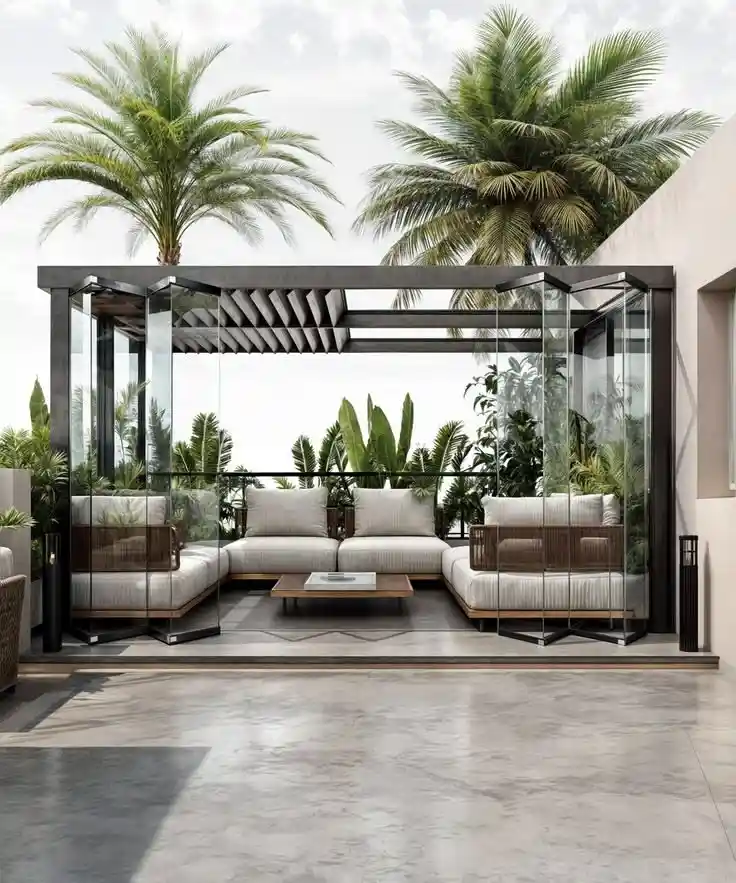

Pergolas have quietly moved from decorative add-ons to central organizing elements in outdoor spaces. In 2026, they are more than posts and beams—they define zones, frame light, and shape the way a backyard is experienced without enclosing it. Tuuci pergolas are a prime example: engineered, precise, yet visually light, they create areas that feel deliberate, even in irregular garden layouts.
Shade is no longer the primary function. It’s almost incidental. What matters in considering about pergola ideas are by taking into account how light filters through slats, how shadow falls across paving and furniture, how movement through the yard feels. Adjustable louvers and retractable panels give these structures flexibility. Tuuci pergolas allow slats to tilt, open, or close, creating shifting patterns of light and shadow across the day. The effect is subtle but palpable, shaping how space is read and used.
Modern Pergola Ideas for Light and Proportion
The most striking pergolas in 2026 are about proportion as much as style. Posts too thick, beams spaced inconsistently, or roofs that feel off-scale ruin the sense of balance. Modern pergolas take cues from architecture: rooflines, window grids, and patio edges are echoed in the posts, angles, and spacing. Aluminum or steel frames feel precise, integrating naturally with both house and garden.
Tuuci pergolas emphasize alignment and spacing. Louvers and beams interact with the surrounding landscape in ways that control light and movement, without making the structure feel heavy. Furniture placed under these pergolas reads differently—spaces are anchored, zones are defined, yet the outdoor area remains breathable.
Freestanding Pergola Ideas as Destinations
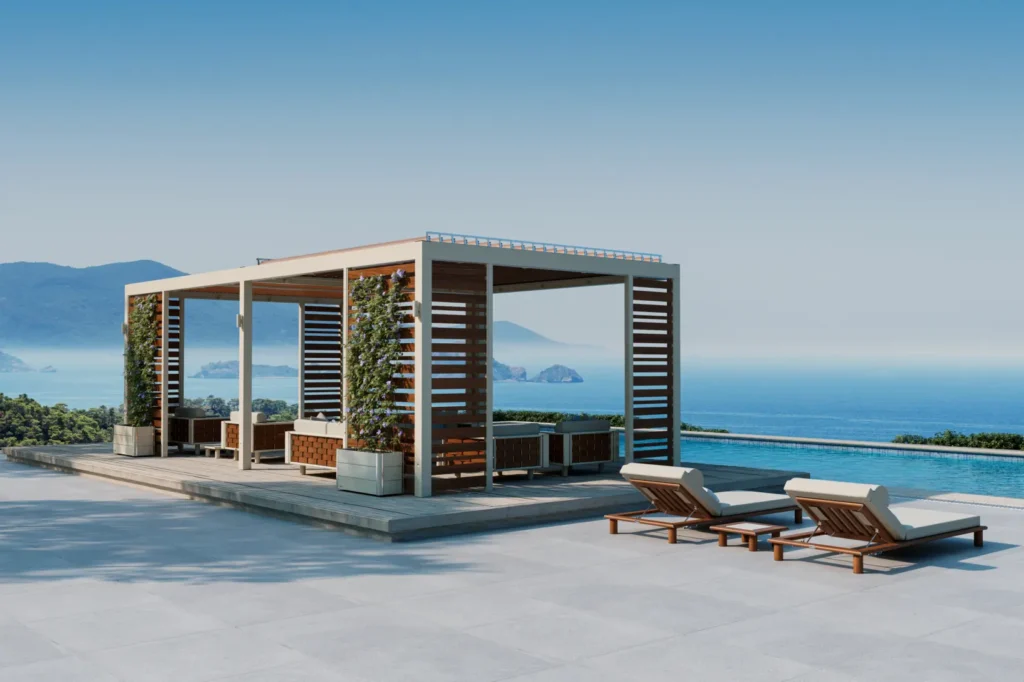
Freestanding pergolas offer a different kind of impact. Unlike attached structures, they create destinations within a yard. Near pools, tucked between plantings, or along garden paths, these pergolas define functional zones without fencing. Lounges, dining areas, or reading nooks gain cohesion and clarity through framing alone.
Tuuci freestanding systems achieve this balance remarkably well. Posts and beams are engineered to feel stable but unobtrusive. Even a wide patio can be visually divided into purposeful areas. Furniture under a freestanding pergola is framed and scaled naturally; the pergola guides attention and movement without overtly controlling it.
Pergola Ideas That Integrate Greenery
Greenery adds a dynamic layer. Vines along beams, wisteria, bougainvillea, or grapevines soften the geometry and alter light and airflow. Early growth may look sparse or uneven, but over months and seasons, the pergola transforms. Light filters through leaves differently, air feels cooler, sounds soften.
Tuuci pergolas can accommodate both plant growth and engineered features like retractable roofs. The combination of living canopy and structural precision turns the pergola into a hybrid element: part landscape, part architecture, part experience. Light, shadow, and air are modulated simultaneously by structure and growth.
Pergola Ideas with Glass Roofs and Louvers
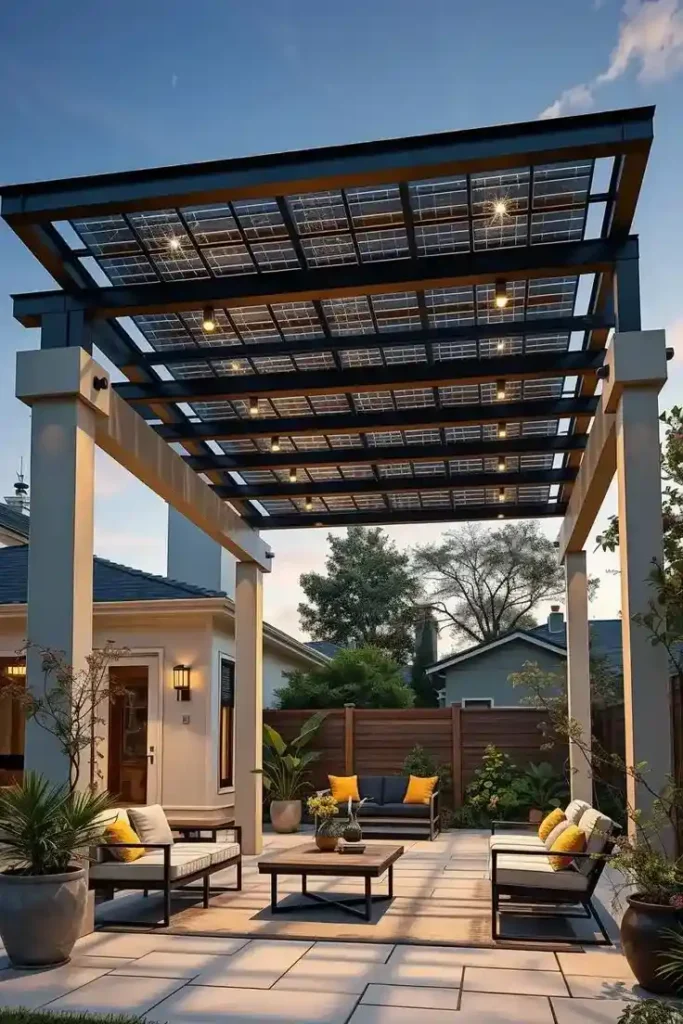
Transparent roofing has moved from novelty to practical feature. Glass panels allow outdoor areas to remain usable in rain or harsh sun, while adjustable louvers manage airflow and shade. Sitting under a glass-topped pergola lets light flood the area without exposure, and rain hitting the surface becomes part of the sensory experience.
Tuuci’s systems combine glass panels with mechanical louvers, offering control without drawing attention to it. Opening, closing, tilting—the adjustments are subtle but affect how light falls and how the backyard feels. Even a small patio gains dimension, balance, and flexibility.
Dining and Lounge Pergola Ideas
Dining tables or lounge furniture take on new scale under pergolas. Without overhead structure, tables can feel exposed. Beams overhead provide context, anchor the space, and give it proportion. Sofas, daybeds, or chairs under a pergola feel framed without confinement. Light and shadow interact with furniture, creating atmosphere and subtly guiding movement.
Tuuci pergolas highlight how precision engineering enhances these effects. Minimal, elegant frames, retractable roofs, and balanced proportions make outdoor rooms feel defined yet open. The space is functional and inviting, without the heaviness of walls.
Multi-Level and Layered Pergola Ideas
In larger yards, pergolas don’t have to be singular structures. Multi-level arrangements create depth and hierarchy. A lower pergola above a dining area, a higher one above a lounge, or a walkway connecting garden zones—all create visual and functional layering. Alignment and spacing are critical. Oversized posts or uneven beams spoil the effect.
Tuuci’s modular systems allow flexibility while maintaining coherence. Sunlight reaches certain areas, shade covers others, and pathways feel guided without rigid borders. Spaces become readable, organized, and dynamic, yet the effect never feels forced.
Pergola Ideas That Shape Light and Atmosphere
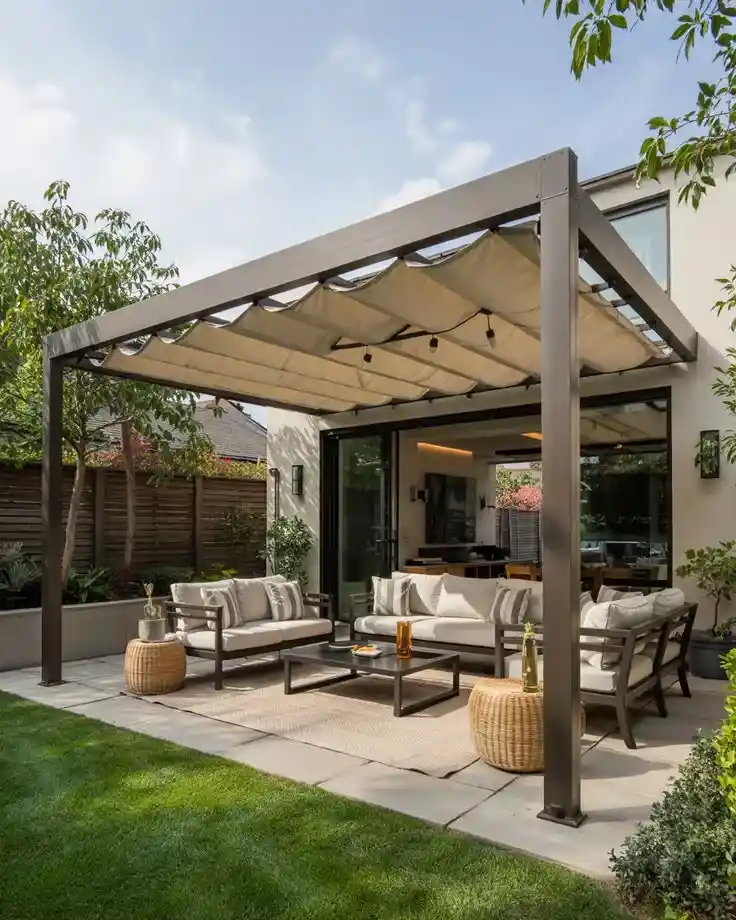
One of the less-discussed qualities of pergolas is their modulation of light. Beams, posts, slats, and optional glass alter shadows, change how surfaces appear, and shift perception throughout the day. Transparent or vegetated roofs produce textures of light, shadow, and reflection.
Tuuci pergolas maximize this interplay. Every component affects light subtly but significantly. The result is a backyard that feels balanced, comfortable, and legible. Structures mediate between architecture, landscape, and the way the space is experienced.
Outdoor Ceilings and Spatial Definition
Pergolas in 2026 function as outdoor ceilings. They define rooms, guide circulation, and shape zones without enclosing them. Minimal frames cast delicate shadows. Glass roofs or leafy canopies produce layers of perception. Multi-level structures add hierarchy and scale.
The pergola becomes the framework around which outdoor space is experienced. It shapes how furniture sits, how people move, how light interacts with the environment. Tuuci’s engineered designs demonstrate that precision and subtlety can coexist. Spaces are functional, flexible, and visually coherent, all without walls.