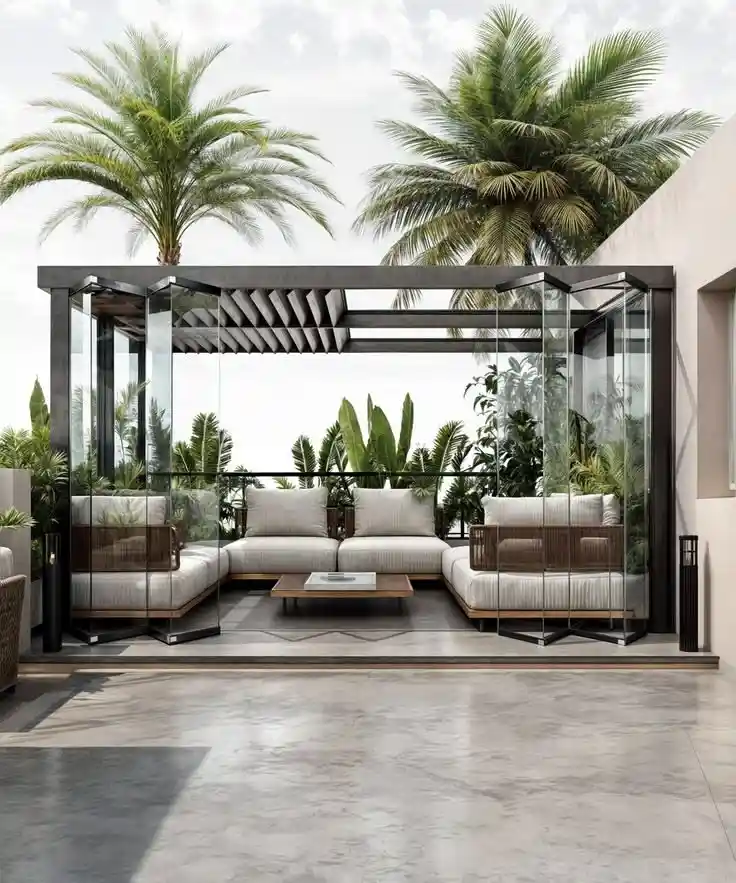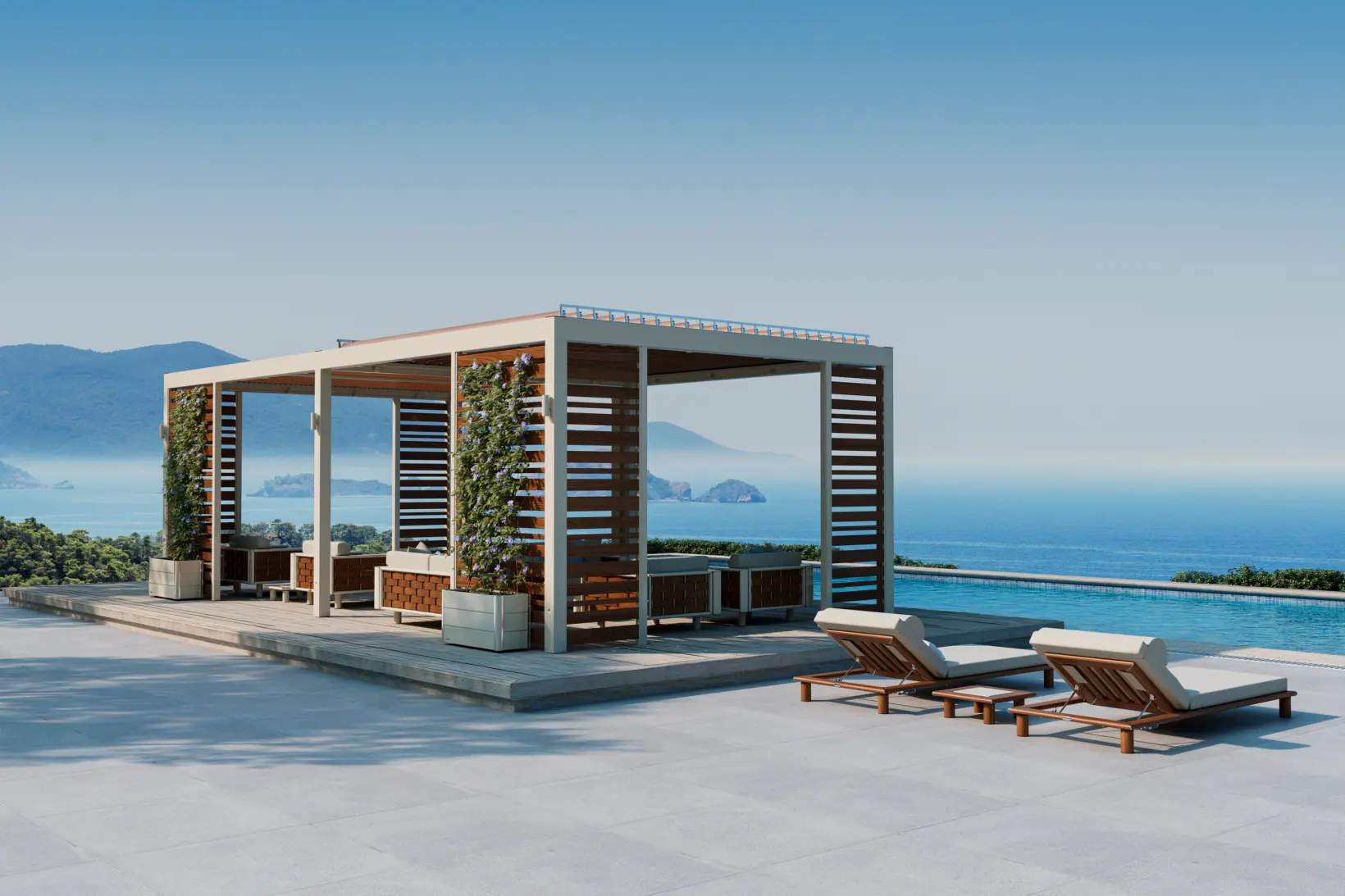

The armless sofa is, at its core, a subtraction. It is the result of a designer looking at the traditional blueprint of domestic comfort and deciding that the heavy, flanking pillars of the rolled or track arm were, perhaps, a bit too much baggage for the modern floor plan. In the current landscape of interior architecture, where square footage is treated with the reverence of a scarce resource, the rise of the armless silhouette feels less like a fleeting trend and more like a necessary pivot toward visual breathing room.
There is a specific kind of arrogance in a traditional three-seater with massive, overstuffed arms. It demands a clearing. It dictates exactly how one must enter and exit the seating arrangement. The armless sofa, by contrast, offers a democratic perimeter. It is a platform rather than a pit. By stripping away the vertical boundaries, the piece stops acting as a room divider and begins to function as a bridge, allowing the eye to travel across the upholstery to the texture of the wall or the light from a window without interruption.

The Geometry of Openness
To understand why the armless sofa has moved from the fringes of avant-garde showrooms into the center of the contemporary home, one must look at the shift in how we actually sit. The rigid, upright posture of the mid-century parlor has been replaced by a more fluid, nomadic approach to relaxation. We lounge diagonally; we perch on the edge to check a phone; we spread out with a laptop. A sofa without arms acknowledges this erratic movement. It doesn’t tell you where your legs should go.
From a purely compositional standpoint, the removal of the arm changes the “weight” of a room. A standard sofa is a box; an armless sofa is a line. This linearity is particularly effective in narrow urban dwellings where a traditional sofa can feel like a barricade. When the ends are left open, the floor becomes more visible, and the ceiling feels higher. It is a trick of perspective that architects have used for decades—minimizing vertical obstructions to maximize the perception of volume.
However, the lack of arms puts an immense amount of pressure on the remaining elements: the textile, the stitch, and the cushion density. There is nowhere for a lazy designer to hide. In a piece with arms, the joinery is often concealed, and the silhouette is forgiven for being a bit muddy. With an armless piece, the profile is everything. The curve of the backrest must be pitch-perfect, and the seam-work must be disciplined. It is furniture reduced to its skeletal essentials.
The Hospitality Influence and the Modular Shift
The residential embrace of armless seating owes a significant debt to high-end hospitality design. Walk into any boutique hotel lobby in Milan or New York, and the seating is rarely a static set of chairs. Instead, there are expansive, low-slung landscapes of armless modules. These pieces are designed for “the linger”—that ambiguous state between arriving and leaving. They suggest a level of sophistication that traditional furniture lacks, mainly because they refuse to look like they are trying too hard to be “cozy.”
This influence has bled into the modular craze. The armless unit is the “workhorse” of the sectional world. It is the infinitely repeatable center-piece that allows a sofa to grow from a modest two-seater into a sprawling conversation pit. But there is a distinct beauty in using an armless sofa as a standalone statement. It has a certain “gallery” quality to it. It looks less like a place to nap and more like a piece of sculpture that happens to be upholstered in bouclé or heavy-grain leather.
Critics of the trend often point to the “cushion slide”—the tendency for pillows to migrate off the ends of the sofa in the absence of a sturdy armrest. This is a valid observation, but it misses the point of the aesthetic. An armless sofa isn’t meant to be a nest of loose throw pillows. It demands a cleaner approach. It asks the user to rely on the integrated lumbar support of the design itself. It is furniture for the disciplined minimalist, for the person who values the integrity of a silhouette over the clutter of extra cushions.

Materiality and the Weighted Base
Because an armless sofa lacks the structural “bookends” of a traditional frame, the base becomes the focal point. We are seeing a move away from spindly legs toward “monolithic” bases—upholstery that goes all the way to the floor, or plinths made of dark oak or brushed steel. This low center of gravity is what keeps the armless sofa from looking flighty or insubstantial. It needs to look grounded, almost as if it were carved from a single block of material.
The choice of fabric becomes the primary narrative. A velvet armless sofa carries a decadent, lounge-heavy energy, reminiscent of 1970s conversation pits. A crisp linen version feels architectural and Mediterranean. Because there are fewer “breaks” in the surface area, the texture of the fabric is amplified. You notice the way light hits the top of the backrest and rolls down the seat. The lack of arms turns the sofa into a canvas for the textile designer.
There is also the matter of the “corner.” In a traditional room layout, the corner is where the sofa arm meets a side table and a lamp. The armless sofa disrupts this. It invites the side table to overlap with the seating or to be placed slightly behind it. It breaks the “static” 90-degree arrangements that have dominated interior design for a century. It encourages a more layered, asymmetrical styling that feels curated rather than bought as a matching set.

Beyond the Trend: A Permanent Shift in Proportions
It is easy to dismiss the armless sofa as a byproduct of the current “minimalist” wave, but that ignores the long-term trajectory of furniture design. We are moving toward a more porous way of living. Walls are coming down, and furniture is expected to be multifunctional and unobtrusive. The armless sofa fits this ethos perfectly. It is a piece that can sit in the middle of a room without creating a visual dead-end. It can be approached from three sides. It is, in many ways, the most versatile tool in a designer’s kit.
The appeal lies in the tension between what is there and what is missing. There is a quiet confidence in a piece of furniture that doesn’t feel the need to wrap its arms around you. It offers a different kind of comfort—one based on freedom of movement and clarity of line. It is an invitation to sit down, stay a while, and not feel boxed in. In a world that often feels increasingly cluttered, that kind of restraint is more than just a design choice; it’s a relief.