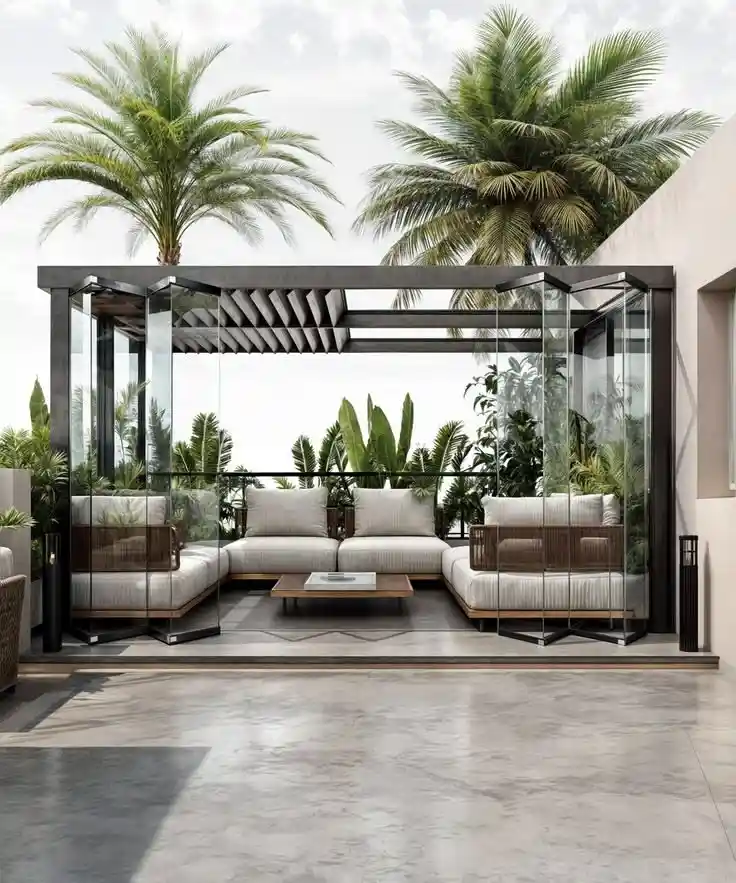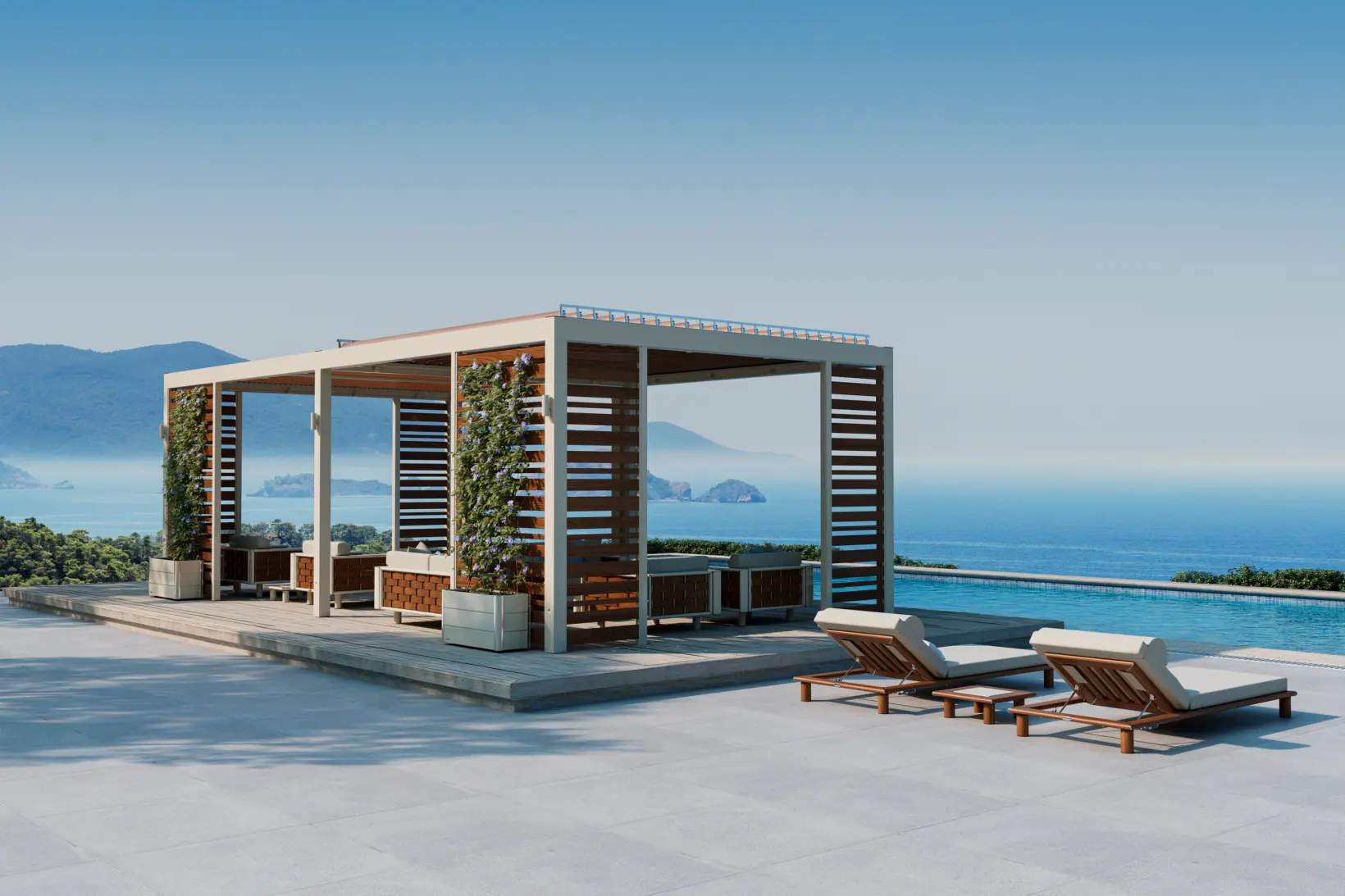

For a long time, the industry was haunted by a very specific, very flat shade of “Millennial Grey” for sofa color. It was the color of indecision—a safe, sterile default that functioned like a visual mute button in the home. But as we move through 2026, that era of chromatic cowardice has finally collapsed. In its place, we are seeing a return to colors that have “weight”—not necessarily in terms of brightness, but in terms of emotional and architectural resonance. The sofa, once a neutral background actor, is being asked to provide the tonal anchor for the entire room.
The shift isn’t just about picking a new swatch; it’s a fundamental change in how we perceive the “base” of an interior. We are moving away from the cool, clinical whites and greys of the 2010s toward what can only be described as “pollinated” neutrals and “atmospheric” primaries. These are colors that feel like they have been pulled from the soil, the forest floor, or a deep tide pool, rather than a chemical laboratory.

The Rise of the Browned Neutral
If there is a singular triumph in the 2026 palette, it is the total rehabilitation of brown. For years, brown was the “unfashionable” choice, associated with heavy, dated 1970s basements. Today, it is the ultimate luxury statement. We are seeing a spectrum of “Cacao Powder,” “Mocha Mousse,” and “Smoked Oak” taking over the showroom floors. These aren’t flat, muddy browns; they are complex, red-toned shades that react beautifully to different lighting conditions.
The appeal of a deep chocolate or burnt caramel sofa lies in its ability to ground a space without the harshness of black. It offers a sense of permanence. In an age of digital ephemeralness, there is something deeply reassuring about a large-scale piece of furniture in a soil-inspired tone. It suggests stability. When rendered in high-pile mohair or a heavy-grain aniline leather, these browns become topographical—they catch the light on the ridges and fall into deep, dark shadows in the folds. They don’t just sit in the room; they hold it down.
The New Architectural Base: Cloud Dancer and Wax Paper
While the “earthy” movement is gaining ground, there is a parallel trend for those who still crave lightness, but it’s a lightness with a soul. Pantone’s “Cloud Dancer” and WGSN’s “Wax Paper” are the defining shades here. These are not your “gallery white” or “optical white.” They are “near-neutrals” with subtle, warm undertones that feel lived-in from day one.
Choosing a sofa in one of these “bone-china” hues is an exercise in material honesty. Because the color is so restrained, the texture of the fabric has to do all the heavy lifting. You cannot hide a cheap weave under a shade like “Cloud Dancer.” It demands the irregularity of raw silk, the slubs of heavy linen, or the architectural “crunch” of a wool bouclé. It’s a color for the design-literate minimalist who understands that “white” is actually a thousand different shades of shadow and light. It creates a “silent” environment, a visual reset that allows the other elements of the room—the grain of a timber coffee table or the patina of a bronze lamp—to speak more clearly.
The Forest Floor: Evolved Greens and Transformative Teal
Green has been “trending” for years, but in 2026, it has matured. We have moved past the bright, optimistic emeralds and sage greens of the early 2020s into deeper, more “nocturnal” territory. The current obsession is with “Smoky Jade,” “Deep Moss,” and the much-discussed “Transformative Teal.”
Teal, in particular, is having a moment of genuine redirection. It sits at the exact intersection of blue’s dependability and green’s vitality. As a sofa color, it functions as a “dark neutral.” In a low-light room, it can look almost black or charcoal, providing a moody, sophisticated backdrop. But when the sun hits it, the aquatic green undertones emerge, bringing a sense of “planet positivity” and freshness into the house. It is a color that feels both ancient and futuristic.
These “forest floor” tones are particularly effective when paired with the current move toward low-slung, monolithic sofa shapes. A deep moss green velvet sofa that goes all the way to the floor doesn’t just look like a piece of furniture; it looks like a mossy outcrop. It blurs the line between the indoors and the outdoors in a way that feels organic rather than forced. It’s biophilic design that has finally grown up and lost its “potted plant” cliches.

The “Wild Card” Accents: Plum and Terracotta
For those who find the earth-tone movement a bit too somber, 2026 has introduced a series of “savory” accents. We are seeing a significant rise in “Deep Plum,” “Aubergine,” and “Mellow Red.” These aren’t the “pop of color” shades of the past; they are dense, sophisticated hues that carry a sense of heritage and “red-toned” warmth.
A burgundy or oxblood sofa in 2026 isn’t a maximalist scream; it’s a grounded, sophisticated choice. It pairs unexpectedly well with the “Universal Khakis” and “Sand” tones that are dominating wall colors. It provides a “weight” that navy blue used to provide, but with more personality. Similarly, “Sunbaked Terracotta” and “Naperon” (a peach-leaning clay) are being used to inject a sense of “Earthy Vibrancy.” These colors feel like they have been baked in the sun, offering a warmth that is tactile and inviting rather than neon and aggressive.

The End of the “Safe” Choice
What is most striking about the 2026 color landscape is the lack of a singular, dominant “must-have” shade. Instead, there is a repertoire of nuances. The “safe” choice is no longer a light grey; the safe choice is now whatever color provides the most “sensorial” comfort to the inhabitant.
The industry has finally realized that color is a structural element of design. It isn’t a coat of paint applied at the end; it is the foundation of the room’s atmosphere. Whether it’s the “visual silence” of an off-white bouclé or the “nocturnal depth” of a teal velvet, the colors of 2026 are about creating a sanctuary. We are no longer designing for the “resale value” or the “Instagram aesthetic.” We are designing for the way a room feels at 6:00 PM when the lamps are turned on and the outside world is shut out. In 2026, the best sofa color is the one that makes you want to stay exactly where you are.