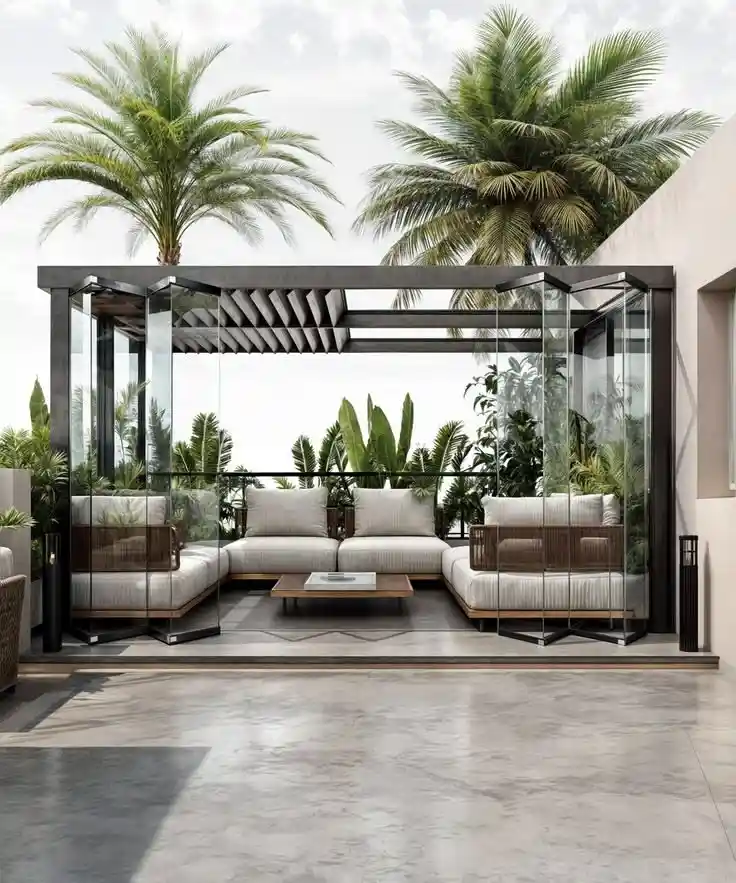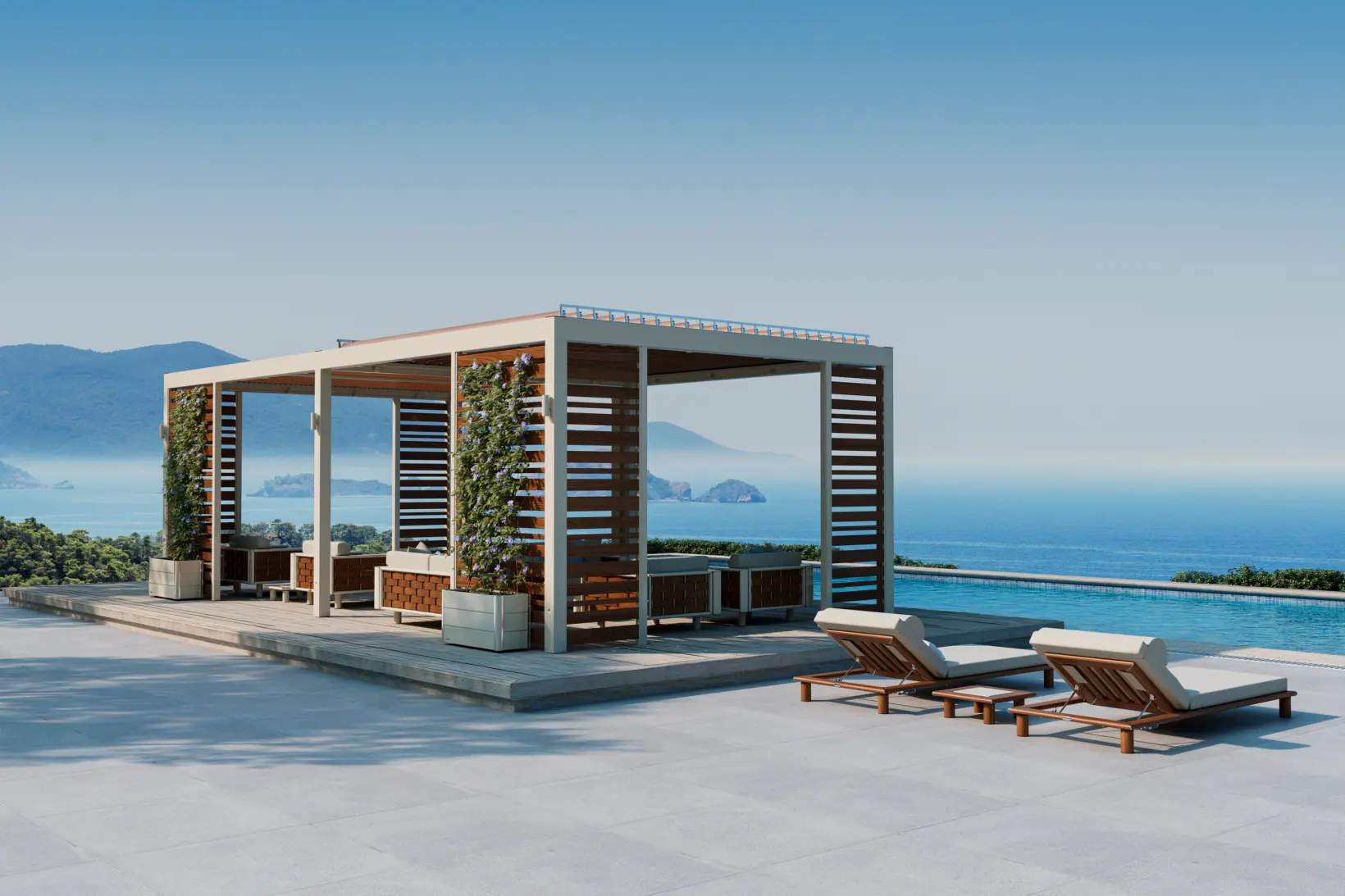

Wicker furniture has always had presence, even when it feels light and airy. It doesn’t shout, but it carries weight. There is a subtle authority in the way fibers twist, bend, and interlock, and it reads almost immediately. Chairs, tables, benches, and ottomans—wicker pieces are exercises in tension: strength disguised as fragility, permanence hidden in flexibility, pattern emerging from irregularity.
Historically, wicker lived in sunrooms, porches, and gardens. It was casual, breezy, almost ornamental. It wasn’t taken as seriously as solid wood or metal. That has changed. Today, wicker is deliberate. Interiors use it to create texture, rhythm, and presence. It asserts itself without bulk or volume. It introduces tactility into spaces that can otherwise feel flat or overly controlled.

Weave as Language
The weave is what defines wicker furniture. Tight patterns feel structural, precise, confident. Looser weaves are light, airy, suggest motion. Shadows shift across the floor and walls, moving with the sun, with lamps, with people. Light interacts differently in the morning than in the afternoon. Even synthetic fibers, designed to mimic natural irregularity, attempt to capture that variation.
The weave also gestures to human touch. It suggests care, labor, and process. Every twist or loop implies intention, whether executed by hand or machine. There’s a subtle imperfection that communicates authenticity, a tactile honesty that most smooth, flat materials cannot match.
Indoor-Outdoor Flexibility
Wicker has been following the trend toward indoor-outdoor fluidity. Once confined to sunrooms and patios, it now appears in living rooms, bedrooms, even dining areas. Outdoor-grade rattan or synthetic wicker has expanded possibilities. It can survive rain, sun, and humidity without losing its charm.
Indoors, wicker is layered thoughtfully. A basket-weave coffee table can anchor a room. A woven armchair can punctuate a corner without dominating it. Wicker introduces pattern and texture subtly, without relying on color or size to make its mark. Even a small side table can shape the rhythm of a space.
Warmth and Texture
The strongest quality of wicker is tactility. Even uncolored or lightly stained pieces feel warm. Fiber variation, surface ridges, and subtle imperfections create depth. Wicker contrasts beautifully with polished metals, smooth wood, and upholstered seating. It softens a space while still reading as structured.
Light and shadow are crucial. The pattern of the weave casts moving shapes across surfaces. It changes as the day moves, as people move. There is an unpredictability, almost a quiet life in every piece. That subtle animation adds dimension to interiors and outdoor areas alike.

Pattern, Repetition, and Rhythm
Weaves are rarely uniform. Small irregularities are part of the charm. Even in synthetic alternatives, minor variation is introduced to avoid a sterile, manufactured appearance. That rhythm, repeated across a surface, draws attention without dominating. Wicker works as furniture, as texture, as pattern, simultaneously.
Scale matters. Small stools, side tables, or chairs carry presence without overwhelming. Larger lounge pieces or sectionals read as intentional without being heavy or intrusive. The pattern allows wicker to adapt to the space while maintaining its own visual voice.
Fragility and Strength
There is a tension in wicker furniture: it looks fragile but is surprisingly resilient. Chairs and benches seem delicate, lightweight, almost fleeting, yet they carry weight and function. That duality is part of the material’s appeal. In contemporary interiors, where furniture is expected to be flexible, mobile, and visually light, wicker fits naturally.
Even perception changes behavior. People approach wicker more deliberately. They pause, they test a seat, they notice the weave. That negotiation introduces a subtle rhythm to a room, a human scale that few other materials create.
Craft and Intention
Craft is inseparable from wicker’s appeal. Even modern machine-made versions try to echo handwork. Interiors that favor tactile, honest materials—wood, leather, woven textiles—benefit from its presence. The weave suggests care, skill, and attention to detail. It communicates intention even when simple, lightweight, or subtle.
This is why wicker persists. Mass-produced surfaces often feel uniform or sterile. Wicker, even synthetic, carries hints of irregularity and narrative. It feels alive.
Indoor-Outdoor Dialogue
Outdoor-grade wicker has allowed designers to stretch its use further. Sectionals, dining sets, and lounge chairs maintain tactility and warmth while enduring the elements. Indoors, the same pieces can act as visual bridges between spaces, connecting living rooms, terraces, and gardens. Wicker is adaptable without being neutral. It holds pattern, texture, and rhythm, yet it allows layering.
Its versatility is part of its trendworthiness. Interiors, porches, sunrooms, patios—they all benefit from the material’s presence. It works in corners, along walls, in open areas. It organizes space without rigid geometry.
Aging Gracefully
Natural wicker changes over time. Fibers soften, tones deepen, small marks appear. The effect is irregular, subtle, and always authentic. Synthetic wicker maintains variation to mimic this evolution. Both approaches speak to durability and narrative.
Contemporary interiors value authenticity, tactility, and visual storytelling. Wicker aligns naturally. It evolves gracefully, suggesting use and human presence without looking worn or cheap.
Statement Without Bulk
Wicker asserts itself without weight. Chairs, sofas, tables—they function as statement pieces without overwhelming. Shadows, light, and weave pattern add drama without heaviness. Interiors gain rhythm, scale, and texture while remaining open.
Even large sectionals retain tactility and lightness. The weave softens the visual impact. A space with wicker never feels static. Movement, shadow, and human interaction give it life.

Quiet Authority
The material works because it balances presence and restraint. It doesn’t demand attention, but it isn’t invisible. Wicker invites touch and interaction. Interiors feel slower, softer, more intentional. Even empty, the furniture shapes the way a room is perceived.
Wicker manages to be casual without triviality, decorative without frivolity, light without fragility. Its quiet authority persists across interiors and outdoor spaces alike.
The material’s enduring appeal isn’t just about trend cycles. It is about tactility, pattern, texture, human scale, and craft. A wicker chair, table, sofa, or bench shapes light, shadow, and movement. It introduces rhythm and warmth. Once it occupies a space, it subtly, inevitably, and persistently reshapes how the room feels.