

Published by Niche Beverly | Outdoor Furniture Los Angeles
It’s one of the first questions anyone asks when they start designing an outdoor space in Los Angeles: teak vs aluminum? The answer, like most things worth getting right, is not as simple as picking a winner. Both materials have earned their place in the world of luxury outdoor furniture. Both are used by the best European and Italian brands. And both, in the right context and the right hands, can produce furniture that performs beautifully for decades in the Southern California climate.
But they perform very differently and the context matters enormously here in LA, where a Malibu beach house terrace, a Bird Streets rooftop, and a Bel Air hillside garden are three genuinely distinct microclimates, each with different demands on whatever furniture you place in them. This guide breaks it down clearly so you can make the right call for your specific situation and your specific space.

First, Why Material Choice Matters More in LA Than Almost Anywhere Else
Los Angeles is not a seasonal city when it comes to outdoor living. In most of the country, patio furniture spends six months in storage. Here, it’s in use year-round — which means it’s exposed to UV radiation year-round, and in coastal areas, to salt air year-round too.
That changes the calculus completely. A material that “works fine outdoors” in the midwest might degrade visibly in eighteen months sitting on a deck in Pacific Palisades. Southern California’s intense sun is one of the most demanding UV environments in the continental United States, and the coastal microclimate from Malibu to Santa Monica adds corrosive salt air into the equation. Inland areas like Calabasas and the Hollywood Hills are drier but subject to extreme heat and occasional strong winds during Santa Ana season.
The right material isn’t just a style preference — it’s an environmental decision. Get it right and your furniture looks better in ten years than it did the day it arrived. Get it wrong and you’re replacing it sooner than anyone wants.
The Case for Teak
Teak is the gold standard of outdoor furniture for good reason. A dense, slow-growing tropical hardwood native to Southeast Asia, it contains exceptionally high levels of natural silica and oils that make it inherently resistant to moisture, rot, insects, and the kind of UV degradation that destroys lesser woods within a few seasons. Quality teak — specifically Grade A, FSC-certified teak sourced from the heartwood of mature trees — can last upwards of seventy-five years outdoors with proper care.
For Los Angeles, teak’s key advantage is its relationship with the coastal environment. The natural oils in teak resist salt air penetration in a way that almost no other wood can match, which is why it has been the material of choice for boat decks, yacht fittings, and seafront architecture for centuries. If your home is within a few miles of the Pacific — Malibu, Santa Monica, Venice, Pacific Palisades — teak’s innate chemistry makes it the more naturally suited choice.
Aesthetically, teak brings a warmth and organic richness that aluminum cannot replicate. When maintained with occasional oiling, it stays a deep honey-gold that photographs beautifully and ages even better. Left untreated, it gradually silvers to a distinguished weathered grey — a patina that many designers and homeowners actively prefer. It’s a living material that changes with time and, unlike synthetics, only gets more characterful as it does.
At Niche Beverly, you’ll find teak at the heart of collections like Ethimo, where FSC-certified teak is used across the Allaperto Lounge Armchair, Sunbed, and coffee table series — all designed to weather LA’s climate with the natural grace the material is known for. Roda, another brand we carry, uses teak bases across several of their outdoor collections in combination with hand-woven rope, producing a layered materiality that looks as considered as any indoor piece.
Teak is ideal when you prioritize: warmth and natural beauty, long-term patina, coastal salt-air resistance, an organic connection to the surrounding landscape, and the kind of tactile richness that no synthetic material fully replicates.
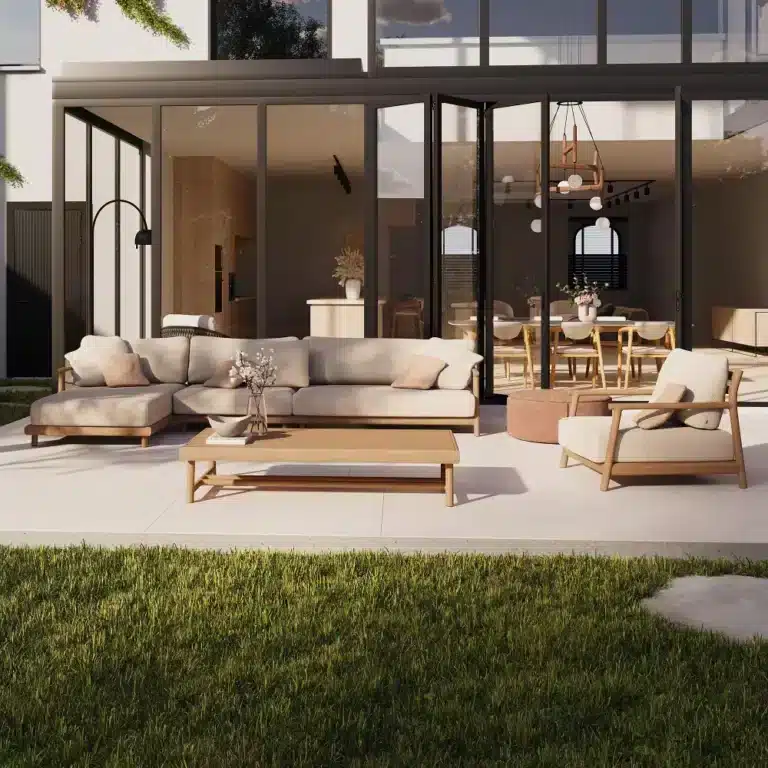
The honest trade-off: Teak requires more attention than aluminum. To maintain the golden tone, it benefits from annual cleaning and occasional oiling. If left untreated, it silvers — which is perfectly fine structurally, but something to factor into your aesthetic expectations. It is also heavier than aluminum, which matters if you rearrange your outdoor layout frequently.
The Case for Aluminum
Powder-coated aluminum is the other great outdoor furniture material of the modern era, and its dominance in contemporary luxury design is no accident. When properly extruded and coated — the key qualifiers here — aluminum is virtually impervious to corrosion, rust, and UV damage. It won’t warp, swell, crack, or splinter. In direct coastal environments, high-quality powder-coated aluminum matches teak’s salt-air resistance and in some cases surpasses it.
What aluminum offers that teak doesn’t is design flexibility. Because it can be extruded, welded, and formed into virtually any profile, aluminum allows designers to achieve the kind of slim, precise silhouettes that would be structurally impossible in wood. Think of the clean-lined frames on a modular sectional sofa, the slender legs of a dining chair, the architectural base of a coffee table — these are aluminum moments. The material is also significantly lighter, making it ideal for furniture that gets moved and reconfigured, or for rooftop installations where structural load is a consideration.
Manutti, the Belgian brand we represent at Niche Beverly, is one of the most sophisticated practitioners of powder-coated aluminum in the luxury outdoor market. Their frames are engineered to achieve a visual delicacy that belies their durability — a slim aluminum leg on a dining chair or a low-profile sofa frame that lets the upholstery do the visual work, rather than competing with it. Ethimo’s collections also use powder-coated aluminum extensively, often pairing it with teak accents to bring warmth to the frame without sacrificing lightness or longevity.
Aluminum is ideal when you prioritize: clean, contemporary lines, low maintenance, light weight and easy rearrangement, a wider range of color and finish options, and furniture that performs in high-UV environments without any seasonal care routine.
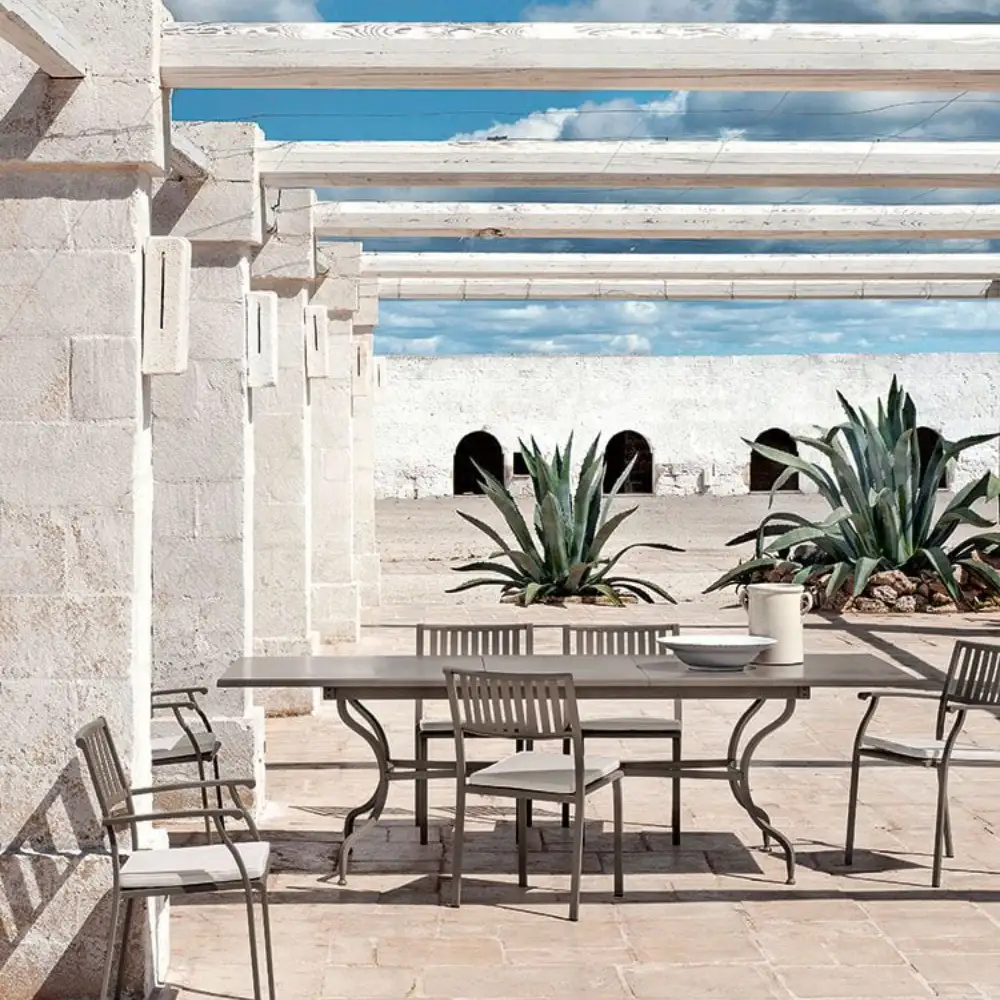
The honest trade-off: Aluminum, even powder-coated, can feel cold to the touch — literally and aesthetically. Without teak accents or rich upholstery, it can read as clinical in certain settings. In the very highest-quality applications this barely registers, but it’s worth considering against the warmth of a teak alternative.
The Best Answer: Both;Used Together
Here’s the truth that the best European outdoor furniture brands have known for years, and that the best LA designers have been practicing: teak and aluminum aren’t rivals. They’re partners.
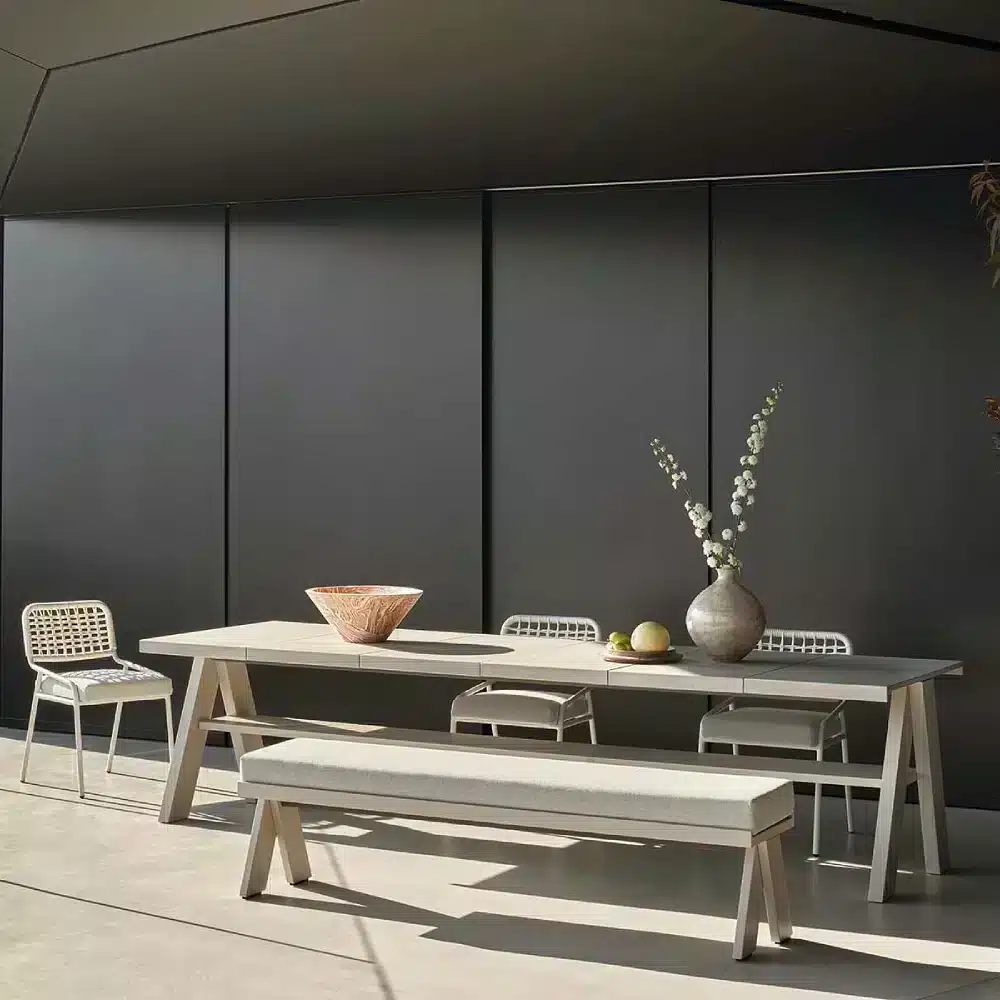
The combination of a powder-coated aluminum structural frame with teak slats, armrests, or table surfaces is one of the most intelligent material decisions in outdoor design. You get aluminum’s structural precision and light weight where it matters most, and teak’s warmth, texture, and organic beauty exactly where your hands and eyes encounter the furniture. The result is a piece that is simultaneously more comfortable, more durable, and more visually interesting than either material alone.
Ethimo’s Swing collection — designed by Patrick Norguet and available at our West Hollywood showroom — is a masterclass in this approach: an outer aluminum structure with interior pickled teak slats that cocooned the sitter, combining the precision of metal engineering with the sensory pleasure of real wood. It’s also a perfect example of how this pairing works aesthetically in an LA context: modern enough for a contemporary Brentwood home, warm enough for a Spanish Revival in Hancock Park.
Which Is Right for Your Specific LA Home?
If your home is directly coastal (Malibu, Venice, Santa Monica): either works, but prioritize marine-grade stainless steel hardware regardless of frame material, and lean toward teak’s natural oils as your primary weather defense.
If you have a hillside or canyon home (Hollywood Hills, Bird Streets, Bel Air): aluminum’s light weight is a practical advantage for terraces and decks where load matters; teak works beautifully here too, especially for furniture that stays in place.
If you’re designing a pool deck: the combination wins. Aluminum frames are easy to dry and rearrange; teak slat sunbeds bring the visual richness that poolside spaces call for.
If you want truly low maintenance: powder-coated aluminum with performance upholstery. Clean with a damp cloth and you’re done.
If you want the most beautiful material that ages with character: Grade A teak, maintained annually, will outlast almost everything else you put outdoors — and look better for it.
See Both Materials in Person at Niche Beverly
The difference between teak and aluminum is something you feel as much as see. We’d encourage you to come into our West Hollywood showroom at 8770 Beverly Blvd and run your hand along both — because until you do, it’s an abstraction. Our design team works with homeowners and trade professionals across Beverly Hills, Bel Air, Malibu, and the wider Los Angeles area, and we’re happy to talk through the material question in the context of your specific project.
Browse our full outdoor collection from Ethimo, Manutti, and more at nichebeverly.com, or contact us at info@nichebeverly.com to arrange a design consultation.
Niche Beverly | 8770 Beverly Blvd, West Hollywood, CA 90048 | (310) 855-1755 | info@nichebeverly.com Trade inquiries and contract projects welcome.
Explore More at Niche Beverly


