

A daybed is one of those rare furniture purchases that genuinely pulls its weight. It’s a sofa when you need one, a guest bed when someone visits, and a reading spot on a quiet Sunday. Done right, it looks intentional. Done wrong, it looks like you couldn’t decide what to put in the room.
This guide covers what actually matters before you buy; dimensions, height, mattress specs, materials, and a few things most buying guides skip entirely.
Table of Contents
- Types of Daybeds
- Daybed Sizes & Dimensions
- Daybed Height: What You Need to Know
- What Mattress Does a Daybed Use?
- Frame Materials: Wood vs. Metal vs. Wicker
- Daybeds for Seniors
- Daybeds for Outdoor Use
- How to Style a Daybed So It Doesn’t Look Like a Bed
- Maintenance & Care
- Frequently Asked Questions
1. Types of Daybeds
Traditional daybeds have a back panel and two side arms, a twin bed that passes as a sofa. Reliable, widely available, works in most rooms.
Trundle daybeds have a pull-out second bed underneath. If you have overnight guests more than a couple of times a year but no dedicated guest room, this is almost always the right call.
Platform daybeds sit on a solid base, no box spring needed. Cleaner look tends to sit lower to the ground.
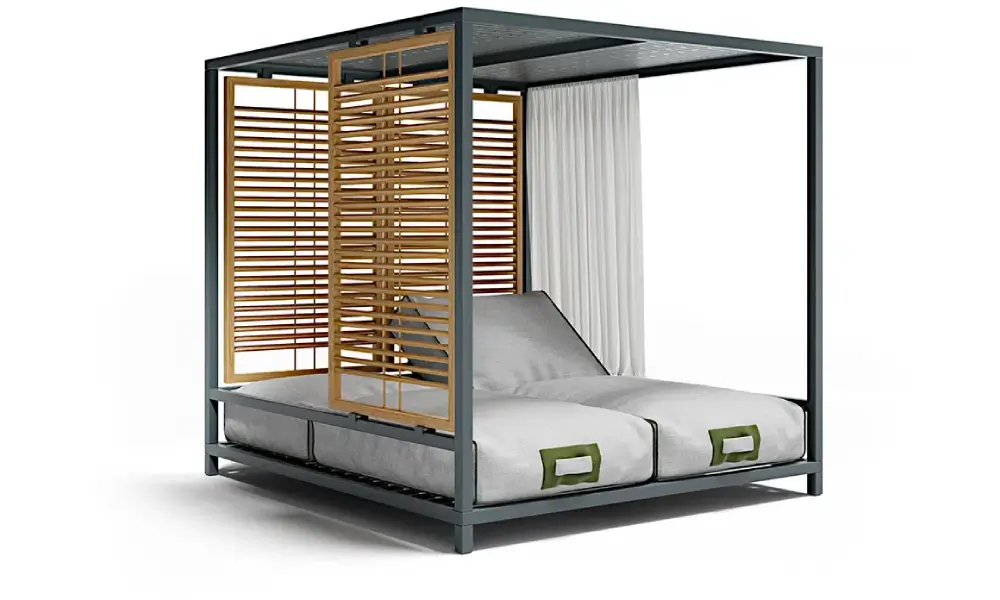
Canopy daybeds make a statement. The overhead structure creates a sense of enclosure that works well outdoors or in a bedroom that can handle a focal point. The Elevated Daybed by GANDIABLASCO is a good reference point, raised 60cm off the ground with a slatted canopy that filters light rather than blocking it entirely.
Outdoor daybeds are an entirely different product category. Frame, fabric, hardware, everything is built around weather resistance first. More on this below.
Upholstered daybeds are the ones that fool people most convincingly into thinking they’re looking at a sofa. Good fabric choice and bolster pillows will complete the illusion.
| Type | Best for | Typical size | Price range |
|---|---|---|---|
| Traditional | Guest rooms, studios | Twin | $150–$600 |
| Trundle | Small spaces, kids’ rooms | Twin + Twin | $250–$800 |
| Platform | Modern interiors | Twin / Full | $300–$900 |
| Canopy | Statement spaces, outdoors | Twin / Full / Queen | $500–$3,000+ |
| Outdoor | Patios, pools, terraces | Twin / Double | $800–$5,000+ |
| Upholstered | Living rooms, home offices | Twin / Full | $400–$2,500 |

2. Daybed Sizes & Dimensions
Most daybeds are built around a standard twin mattress (38″ × 75″). Some go up to full (54″ × 75″) or queen if you need more room, but twin is the norm — it’s what keeps the proportions sofa-like.
The frame itself typically runs 78–80″ long and 42–44″ wide. Measure your wall before ordering, and leave a few inches of clearance on each side. If you’re looking at a trundle model, check the floor clearance underneath — you need at least 7–8″ for it to roll out without scraping.
3. Daybed Height: What You Need to Know
People underestimate how much height matters. Buy a daybed that sits too low and you’ll feel like you’re getting up off the floor every time. Too high and your feet dangle awkwardly when you’re sitting.
Standard finished height (top of mattress to floor) runs from 17 to 24 inches. For a daybed doing double duty as a sofa and a bed, 18–20 inches tends to work best — close enough to standard sofa seat height that it feels natural.
A few benchmarks worth keeping in mind:
- 17–19 inches is the comfortable seated range for most adults
- 20–23 inches is easier to get in and out of as a bed
- 20–22 inches is the recommended range for seniors (more on this below)
- Trundle clearance requires at least 10–12 inches of frame height underneath
Frame height alone doesn’t tell you much — always add your mattress thickness to get the actual finished number.
4. What Mattress Does a Daybed Use?
Standard twin (38″ × 75″) in most cases. Twin XL fits some frames but double-check the internal dimensions first — a 5-inch length gap looks worse than you’d expect.
Thickness matters more than people realise. If the daybed is used mostly as a sofa, keep it between 6 and 8 inches. A 10-inch mattress isn’t wrong, but it’ll push your seated height up and make the back cushions feel off. For a primary sleeping setup, 8–10 inches with proper support is worth it.
On mattress type: innerspring is the better choice if people will be sitting on it regularly — firmer, more supportive, easier to get up from. Memory foam is more comfortable for sleeping but softer and warmer. Latex splits the difference reasonably well if budget allows.

5. Frame Materials: Wood vs. Metal vs. Wicker
Wood is the most versatile. Solid hardwood — oak, teak, mahogany — will genuinely last decades if the joinery is good. The Jeko 81 Daybed, for example, is built from reclaimed ECOTeak beams, polished to bring out the grain. It’s heavy, which is the main trade-off, but it won’t wobble.
Metal is lighter and usually cheaper. Powder-coated steel or iron resists chips and rust better than bare metal — especially important for anything near a window or outdoors. The frames can be very sturdy, but check the joints. Thin welding is the weak point on budget metal daybeds.
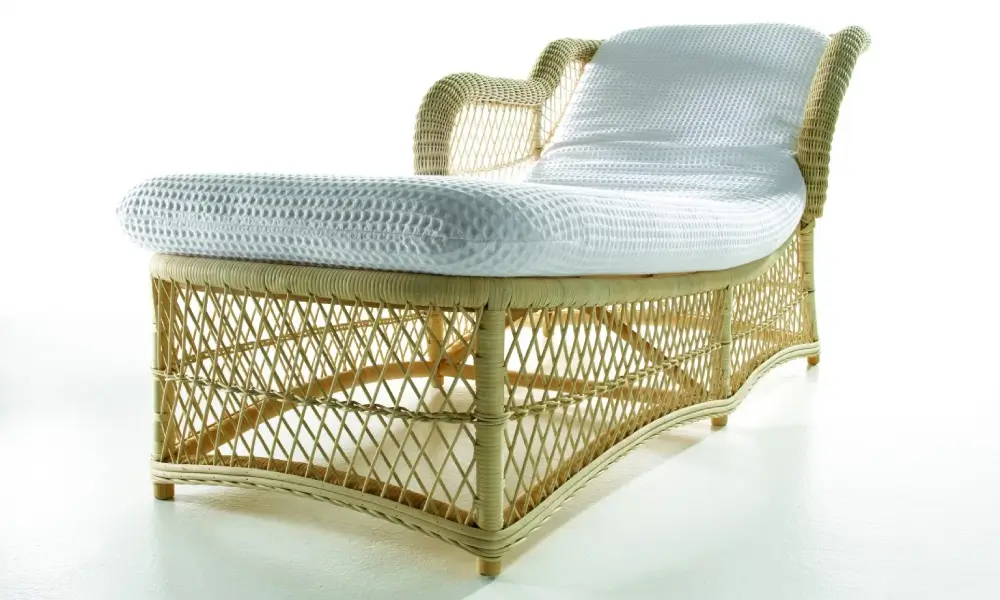
Wicker and rattan look great in the right setting. Natural wicker degrades outdoors; synthetic resin holds up far better in the elements. Don’t expect the structural longevity of hardwood.
Upholstered frames are the most sofa-like but the most demanding to maintain. Fabric shows wear. It stains. Pick a performance fabric if the daybed is going somewhere it’ll get daily use.
6. Daybeds for Seniors
Height becomes a functional issue, not just a style preference. Getting in and out of a low bed is genuinely difficult with limited knee mobility, and a fall from an unstable frame is a real risk.
For older adults, aim for 20–22 inches of finished height (mattress top to floor). That’s achievable with a higher frame paired with a thinner, firmer mattress — don’t stack a thick soft mattress on a high frame and end up at 26 inches.
Other things that matter: solid armrests or side rails to grip when standing up, a stable non-flexing base, and a firm mattress. Plush comfort sounds appealing but makes rising harder. Ease of use is the priority.
7. Daybeds for Outdoor Use
Outdoor daybeds need to be treated as a separate product category. The frame, cushions, and hardware all need to be specified for outdoor conditions — buying a beautiful indoor piece and leaving it on the patio will end badly within a season or two.
Teak remains the benchmark for hardwood outdoor furniture. Naturally water-resistant, dense, and it ages well. The Belvedere Daybed is a classic example — solid mahogany hardwood, stackable frame, thick cushions, built for daily outdoor use. The Belvedere Double Edition is the same construction with room for two.
Powder-coated aluminium is the low-maintenance alternative. Rust-proof, lightweight, and handles year-round exposure without much intervention.
For cushions, Sunbrella or equivalent solution-dyed acrylic fabric is worth specifying. It resists UV fade and mildew far better than standard outdoor fabric. Removable covers are non-negotiable — you will need to wash them.
One detail people miss: check that all hardware is stainless steel or marine-grade if the piece is going anywhere near salt air. Standard steel screws will rust within a year by the coast.
Browse the full outdoor daybed collection at Niche Beverly if you want to see how teak and aluminium options compare side by side.
8. How to Style a Daybed So It Doesn’t Look Like a Bed
The challenge with daybeds is that they have to earn their place in a room visually. A bare daybed with a fitted sheet reads as a bed that ended up in the wrong room.
The fix is mostly about layering. Bolster pillows at each end immediately signal “sofa” — they act as armrests and break the horizontal slab reading. Stack a couple of cushions at the back, use a folded throw rather than a duvet, and pick colours that connect to the rest of the room.
A side table helps too. It frames the piece and makes it feel like deliberate furniture rather than overflow sleeping. Some outdoor daybeds solve this neatly — the Grand Belvedere has a built-in marble-topped side table as part of the frame. If the base or trundle mechanism is visible underneath and looks unfinished, a bed skirt sorts it quickly.
9. Maintenance & Care
Indoor daybeds are low maintenance. Vacuum upholstered surfaces every couple of weeks, spot-clean spills immediately with mild soap and cold water, and rotate the mattress every few months if it’s used daily.
Outdoor daybeds take a bit more attention. Let cushion covers dry fully before covering or storing — moisture trapped underneath is how mildew starts. Bring cushions in during heavy rain or off-season if you can. Teak benefits from annual oiling if you want to keep the warm colour; leaving it untreated is fine if you like the natural silver patina it develops.
Check the warranty before buying. A good outdoor daybed should carry at least a year on the frame, and premium brands often go to five.
10. Frequently Asked Questions
What size mattress does a daybed use? Standard twin (38″ × 75″) in most cases. Check the frame’s internal dimensions before buying separately — don’t assume.
What height should a daybed be? 18–20 inches (finished, mattress to floor) works for most adults. For seniors, 20–22 inches is easier to get in and out of safely.
What to look for when buying a daybed? Frame quality and joint construction first. Then total finished height. Then mattress compatibility. Style is last — it won’t matter if the thing wobbles or puts you too close to the floor.
Can you sleep on a daybed every night? Yes, if the mattress is supportive enough. Daily use calls for at least 8 inches of proper support. A twin is fine for one adult; anyone over 6 feet will feel the length constraint.
What’s the difference between a daybed and a trundle bed? A daybed functions as both a sofa and a bed on its own. A trundle is the pull-out secondary bed that tucks underneath. Many daybeds are trundle-compatible, but the trundle is often sold separately — confirm before buying.
Can two people sleep on a daybed? Not comfortably on a standard twin. Full and queen-size models can fit two, but the sofa proportions suffer. A trundle setup — two separate twin surfaces — is usually more practical for couples or siblings.
Niche Beverly carries a range of indoor and outdoor daybeds across materials and price points. Browse the full collection or get in touch if you want a recommendation for your specific space.
Explore More at Niche Beverly
Shopping for a daybed in Los Angeles? Visit the Niche Beverly showroom in West Hollywood to see the collection in person before you buy.


